
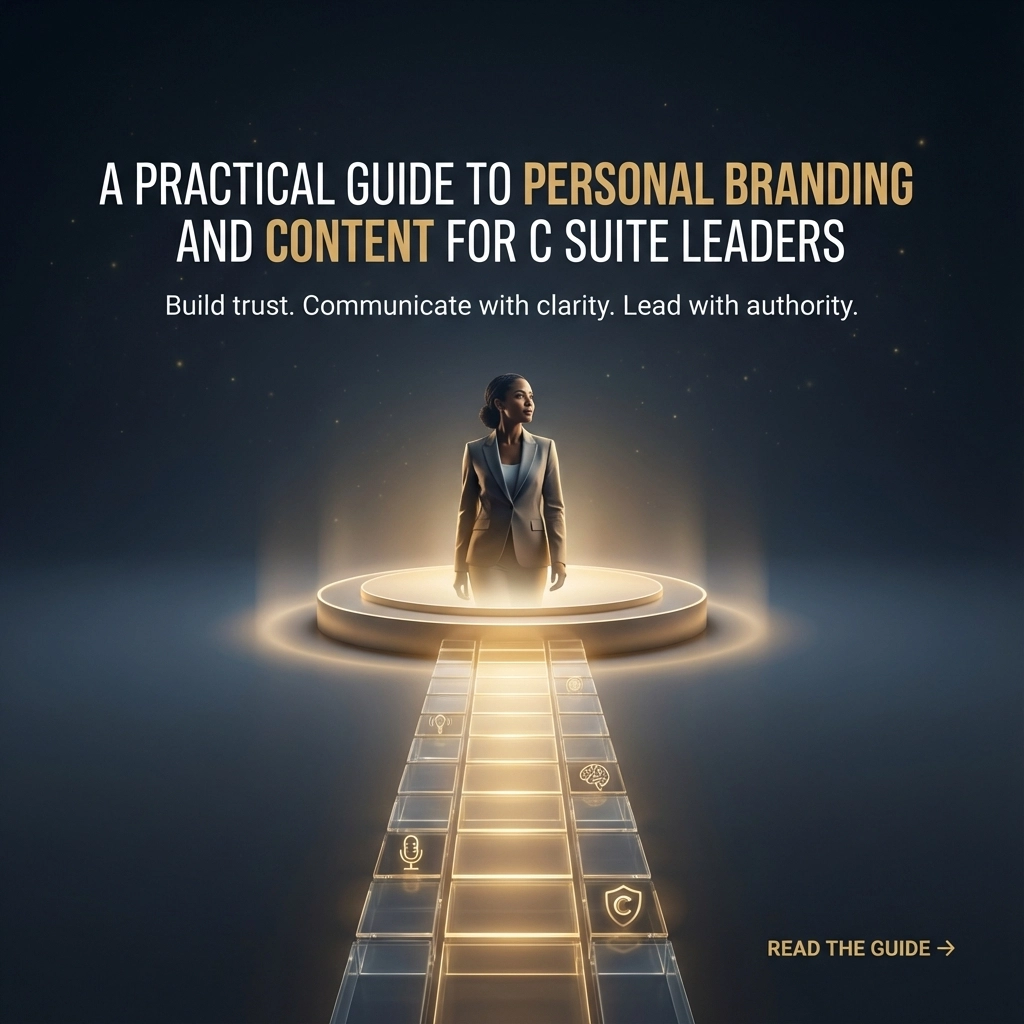
A Practical Guide to C-Suite Personal Branding: How Senior Leaders Build Visibility That Moves the Business
Start your career as color grading editor
Id sit donec fermentum quis facilisis sagittis velit pulvinar sollicitudinat dolor aliquam risus ultricies cras tortor est lacus vitae scelerisque ac aliquam rutrum mattis mauris commodo invitaeleo odio amet mi pulvinar in sagittis quis auctor vestibulum quisque tristique sagittis non ullamcorper donec.
- Neque sodales ut etiam sit amet nisl purus non tellus orci ac auctor
- Adipiscing elit ut aliquam purus sit amet viverra suspendisse potenti
- Mauris commodo quis imperdiet massa tincidunt nunc pulvinar
- Adipiscing elit ut aliquam purus sit amet viverra suspendisse potenti
Choosing the right color software
Vitae congue eu consequat ac felis placerat vestibulum lectus mauris ultrices cursus sit amet dictum sit amet justo donec enim diam porttitor lacus luctus accumsan tortor posuere praesent tristique magna sit amet purus gravida quis blandit turpis dolor sit amet consectur.

At risus viverra adipiscing at in tellus integer feugiat nisl pretium fusce id velit ut tortor sagittis orci a scelerisque purus semper eget at lectus urna duis convallis. porta nibh venenatis cras sed felis eget neque laoreet suspendisse interdum consectetur libero id faucibus nisl donec pretium vulputate sapien nec sagittis aliquam nunc lobortis mattis aliquam faucibus purus in.
Choosing the best computer monitor
At risus viverra adipiscing at in tellus integer feugiat nisl pretium fusce id velit ut tortor sagittis orci a scelerisque purus semper eget at lectus urna duis convallis. Porta nibh venenatis cras sed felis eget neque laoreet suspendisse interdum consectetur libero id faucibus nisl donec pretium vulputate sapien nec sagittis aliquam nunc lobortis mattis aliquam faucibus purus in.
- Neque sodales ut etiam sit amet nisl purus non tellus orci ac
- Adipiscing elit ut aliquam purus sit amet viverra suspendisse
- Mauris commodo quis imperdiet massa tincidunt nunc pulvinar
- Adipiscing elit ut aliquam purus sit amet viverra suspendisse
Creating your viewing environment
Nisi quis eleifend quam adipiscing vitae aliquet bibendum enim facilisis gravida neque. Velit euismod in pellentesque massa placerat volutpat lacus laoreet non curabitur gravida odio aenean sed adipiscing diam donec adipiscing tristique risus. amet est placerat in egestas erat imperdiet sed euismod nisi.
Varius duis at consectetur lorem donec massa sapien faucibus etivamus arcu felis bibendum ut tristique et egestas quis ccumsan sit amet nulla facilisi morbi orci a scelerisque purus
Conclusion
Eget lorem dolor sed viverra ipsum nunc aliquet bibendum felis donec et odio pellentesque diam volutpat commodo sed egestas aliquam sem fringilla ut morbi tincidunt augue interdum velit euismod eu tincidunt tortor aliquam nulla facilisi aenean sed adipiscing diam donec
A Practical Guide to C-Suite Personal Branding: How Senior Leaders Build Visibility That Moves the Business
Most senior leaders carry more authority than their public profile reflects. A managing director trusted inside her organisation, known to clients who have worked with her for years, and respected by peers across her sector can still be effectively invisible to the prospects, partners, and talent she most needs to reach.
Personal branding for C-suite leaders is the work of closing that gap. Not as a vanity project or a marketing exercise separate from real leadership, but as a practical business development and organisational strategy that compounds over time.
According to Weber Shandwick's CEO Reputation Premium research, approximately 44% of a company's market value is directly attributable to the reputation of its chief executive. For professional services firms, B Corps, and SaaS businesses where the founder is also the primary trust signal, that figure is likely higher. This is not a soft metric. It shows up in hiring quality, client retention, partnership conversations, and exit valuations.
What Is C-Suite Personal Branding, and Why Does It Matter Now?
C-suite personal brand (explore the Authority Accelerator)ing is the deliberate, consistent communication of who a senior leader is, what they stand for, and how they think, across the channels where their key stakeholders are paying attention. It is distinct from corporate communications in that it carries the leader's own voice, perspective, and experience rather than a managed brand message.
It matters more now than at any previous point because B2B buying behaviour has changed fundamentally. According to Gartner's 2023 B2B Buying Study, buyers spend just 17% of their purchasing journey in direct contact with potential suppliers. The rest happens in independent research, peer conversations, and digital evaluation of thought leadership and credibility signals. A C-suite leader who is invisible in those channels is not being evaluated during the phase that most influences the final decision.
Three questions a personal brand needs to answer clearly: What is this person known for? What do they stand for? Can I trust what they say? Answering those questions through consistent, honest content is the practical work of C-suite personal branding.
How Do Senior Leaders Build Genuine Trust Through Personal Branding?
Trust at senior level is built in three places simultaneously: what you say, what you do, and where you show up. Personal branding content is the mechanism that makes those three things visible beyond the immediate circles you already operate in.
Creating a Personal Positioning Statement
The starting point is a clear personal positioning statement: a single short paragraph that answers who you are as a leader, what you care about, and what problems you help solve. This statement should run as a consistent thread across your LinkedIn profile, speaking biography, media quotes, and internal communications. Not copied word for word across each, but clearly coming from the same person with the same voice and the same convictions.
The test for a good positioning statement is specificity. "A senior leader with extensive experience in professional services" is not a positioning statement. "A managing director who helps B2B consultancies break out of referral dependency by building trust infrastructure that works while they are busy delivering client work" is.
Sharing Genuine Thinking in Public
The most effective C-suite personal branding content is the thinking that already happens in board meetings, client conversations, and leadership team sessions, made accessible to a wider audience. This does not require a PR team or a content agency. It requires the discipline to take one specific observation or insight per week and share it in plain language through the channels where your target audience is paying attention.
LinkedIn posts that address real problems in specific language. Longer articles that break down one business lesson with enough detail to be genuinely useful. Talks and panel appearances where you share real stories from the work rather than polished corporate narratives. Each of these builds the same currency: demonstrated thinking that gives people a basis for trusting your judgement before they ever work with you.
Showing the Person Behind the Title
People trust leaders who feel human. This does not require oversharing or diary-style confession. It means being willing to talk about decisions that were genuinely difficult, about the time you changed your mind on something important, about what you care about beyond the quarterly results. Those moments of genuine disclosure accelerate trust more than any credential or client list.
How Does C-Suite Visibility Connect to Business Results?
The commercial case for senior leader visibility is well-documented across several dimensions.
Talent Acquisition and Retention
Strong employer brands, built in significant part through founder and senior leader content, consistently outperform in hiring. Research cited in multiple talent acquisition studies shows that firms with visible, active senior leadership can reduce hiring costs substantially and attract candidates who are self-selecting based on alignment with the leader's values and approach. In professional services, where people are the primary product, that quality differential directly affects client outcomes and retention.
Pricing and Commercial Position
Prospects who arrive having followed a founder's thinking for months do not arrive anchoring to a competitor's price. They arrive with established confidence in the approach and a pre-formed sense of the value. Premium pricing becomes a natural reflection of demonstrated expertise rather than a position that needs to be defended in the negotiation.
Exit and Valuation
Acquirers and investors now evaluate digital presence as part of due diligence. A sparse or dormant digital profile signals stagnation, even when the underlying business is healthy. An active, considered thought leadership presence signals growth trajectory and modern, forward-looking leadership. That perception gap shows up in valuation conversations.
What Content Should a C-Suite Leader Actually Publish?
The question most senior leaders ask is not whether to create content, but what to say. The answer is simpler than most content strategy frameworks suggest.
Regular, Short-Form Thinking
One or two LinkedIn posts per week, addressing topics you already think about and discuss internally. These do not need to be long or polished. They need to be specific, honest, and useful to the people you most want to reach. The managing director who writes about what she actually learned from a difficult client disengagement teaches more and builds more trust than the one who writes about "the importance of client communication."
Occasional, Deeper Work
A longer article every four to six weeks that goes deeper into one theme. These longer pieces serve a different function: they demonstrate the capacity for sustained, nuanced thinking, they are more likely to be shared within professional networks, and they create a more durable record of your perspective on issues that matter to your sector.
Video and Speaking Appearances
Short video content on LinkedIn, combined with selective appearances at industry events and on trusted podcasts, adds the human dimension that text alone cannot replicate. Video builds the parasocial familiarity that makes prospects feel they already know you before any conversation. Even one or two videos per month, direct to camera, addressing a specific question your ideal clients are grappling with, builds genuine visibility over time.
Repurposing What You Already Say
Senior leaders already produce substantial thinking in internal settings: board presentations, client workshops, keynote addresses, team briefings. The most efficient content strategy is capturing and translating that existing thinking into public-facing material. A 45-minute leadership talk becomes twelve LinkedIn clips. An internal strategy document becomes three LinkedIn posts and an article. The thinking has already happened. Content production becomes a translation exercise rather than a creation exercise.
How Do You Align Personal Brand with Company Direction?
A personal brand that pulls in a different direction from the company's strategic priorities creates confusion and dilutes both. The most effective senior leader brands reinforce and amplify the company's direction rather than running in parallel to it.
In practice, this means agreeing with your marketing and communications leadership on two or three themes that your personal content will consistently address over the next twelve months. Those themes should sit at the intersection of your genuine expertise and the company's strategic positioning. Your content then becomes simultaneously a personal credibility asset and a company visibility asset.
The annual review of that alignment matters. As the company's direction evolves, your personal brand content should evolve with it. What made sense to emphasise in year one of a new strategic direction may need to shift in year two as different aspects of the positioning mature.
What Is the VELO Method Approach to Senior Leader Visibility?
The VELO Method provides a structured framework for building senior leader visibility that connects directly to commercial outcomes. The Visibility stage maps specifically how discoverable a leader is in the channels where their target prospects research and evaluate. The North Star metric is an "already know you" rate of 70% or higher among target prospects.
For senior leaders who want to build this systematically, the LinkedIn Visibility Engine (£5,000+VAT) creates the full architecture: content strategy, production cadence, engagement system, and measurement framework. For those who want to build a comprehensive thought leadership position in a specific sector, the Authority Accelerator (£8,500+VAT) and Sector Leadership Programme (£12,000+VAT) provide the deeper build.
The free VELO Readiness Diagnostic at diagnostic.epiphanycontent.com is the right first step: it maps where you currently sit across all four VELO stages and shows you specifically what will move the commercial needle fastest given your current position.
How Do You Manage Your Reputation as Your Public Profile Grows?
As your visibility increases, so does the scrutiny. A simple reputation management system prevents small issues from becoming significant ones.
Set up basic monitoring: Google Alerts for your name, quarterly reviews of your main profiles, and a consistent practice of reading how your content is being received and discussed. In the event of criticism or error, the most effective response is almost always direct and honest acknowledgement. Leaders who own mistakes publicly build more trust than those who manage or minimise them. The recovery from an honest "I got that wrong, and here is what I have changed" is typically faster and more complete than the recovery from a defensive non-response.
Work with your communications and legal teams on a clear protocol: who drafts, who approves, where responses appear, and how follow-up is handled. Having that process agreed in advance means you are not making those decisions under pressure when something goes wrong.
Why This Matters for AI Discoverability
94% of B2B buyers now use AI tools during their purchasing process (6Sense, 2025). When members of a buying committee research your sector through ChatGPT, Perplexity, or Gemini, the AI engine synthesises answers from across the web and cites specific sources. Firms with structured, evidence-rich content get cited. Firms without it remain invisible to the majority of the buying committee.
The content strategy described in this article directly contributes to your AI discoverability. Every piece of well-structured thought leadership, every FAQ answered with specific data, and every methodology documented with clarity becomes a potential citation source for AI engines. The OtterlyAI YouTube Citation Study (March 2026) found that content structure and depth predict citation far more reliably than audience size or domain authority.
Your Next Step
Building trust infrastructure that compresses your sales cycle starts with understanding where you stand. Here are three ways to begin:
Assess your AI discoverability. Take the free GEO Visibility Audit to see how visible your firm is when buyers research your sector through ChatGPT, Perplexity, and Gemini.
Map your trust infrastructure. The free Trust Velocity Diagnostic measures your position across all four VELO pillars: Visibility, Evidence, Library, and Outcomes.
Take action. The Authority Accelerator builds your complete authority infrastructure over 12 weeks, covering video, LinkedIn, and AI discoverability. For sector-wide positioning, the Sector Leadership Programme creates a 12-month trust infrastructure programme.
Frequently Asked Questions
What is C-suite personal branding, and how is it different from corporate communications?
C-suite personal branding is the deliberate, consistent communication of a senior leader's own voice, values, and thinking across channels where key stakeholders are paying attention. It differs from corporate communications in that it carries the leader's personal perspective rather than a managed brand message. The most effective personal brands are deeply aligned with the company's direction but expressed in the leader's own genuine voice rather than in corporate language.
How much of a company's reputation is tied to its senior leadership?
Weber Shandwick's CEO Reputation Premium research found that approximately 44% of a company's market value is directly attributable to the reputation of its chief executive. For professional services firms and founder-led businesses, the proportion is likely higher given the direct connection between the founder's personal credibility and the company's primary trust signal. This figure manifests in hiring quality, client acquisition cost, pricing power, and exit valuations.
How do C-suite leaders build personal brands without it consuming excessive time?
The most time-efficient approach is the repurpose-first model: capturing and translating thinking that already happens in internal settings, board presentations, client workshops, keynote addresses, into public-facing content. The VELO Method's Waterfall system turns one flagship piece of content into 20 or more derivative assets, giving a leader daily visibility without daily creation effort. The Video Foundation Day from Epiphany Content captures three months of content in a single structured session.
What should a C-suite leader post on LinkedIn to build genuine authority?
The most effective LinkedIn content for senior leaders is specific, honest, and useful to a clearly defined audience. It describes real situations with enough texture that readers recognise their own experience in it. It shares genuine perspective on topics that matter to the leader's ideal clients or stakeholders, not just trending industry topics. And it occasionally acknowledges difficulty or uncertainty, which builds more trust than a continuous highlights reel.
How does senior leader visibility affect talent acquisition?
Firms with visible, active senior leadership consistently outperform in hiring quality and cost. Strong personal brands signal cultural values clearly, which attracts candidates who are self-selecting based on genuine alignment rather than just salary. Research across talent acquisition contexts shows that firms with weak public profiles often pay 10 to 50% more in compensation to attract comparable talent. In professional services, where people are the primary product, that quality differential has a direct effect on client outcomes.
Where do I start if I want to build my personal brand as a senior leader?
The VELO Readiness Diagnostic at diagnostic.epiphanycontent.com maps where you currently sit across all four VELO stages, including Visibility, and identifies the specific gaps that will move the commercial needle fastest. The Trust Gap Quiz at quiz.epiphanycontent.com shows where your current public presence is building or undermining trust with your ideal clients or prospects. Both are free and take less than ten minutes.


